The Amazon Expedition is a field investigation into how one of the most important ecosystems on Earth actually functions, viewed from the water, through the people who live there, and against the pressures of modern development.
The romantic image of untouched rainforest is not what you find from the water. You find a working landscape.
An expedition can be measured in miles. An investigation is measured in what it explains. Over 1,650 river miles from Coca into Peru and back, we are documenting a single watershed from three vantage points at once: the water itself, the people who live on it, and the industries competing for it.
The stories we tell along the way fall into nine interconnected threads. None of them stands alone; every one of them runs into the others.
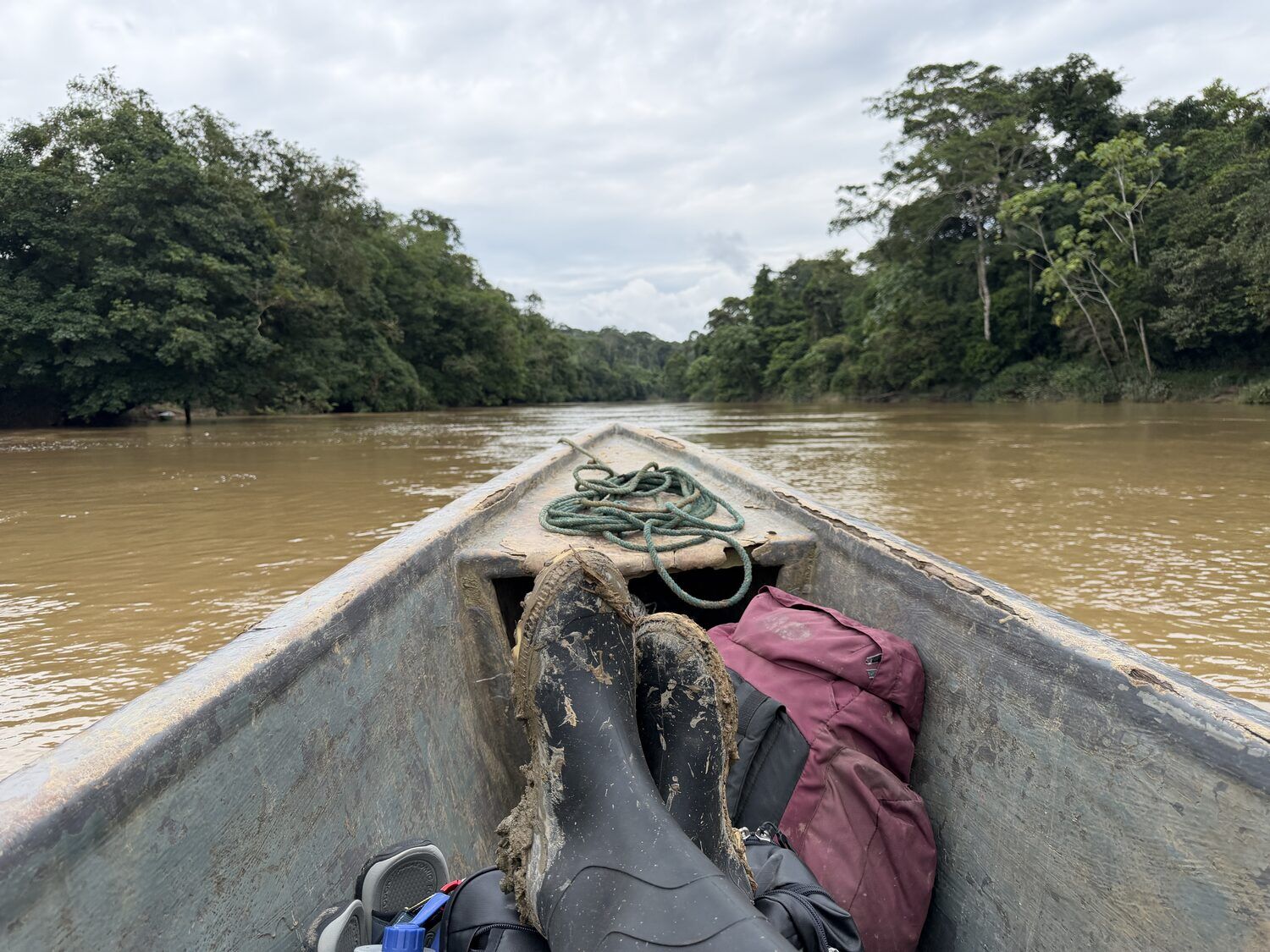
We will document the waterways from Ecuador toward Peru as living systems: charting routes, channels, depths, current speeds, water temperatures, navigability, seasonal changes, tributaries, hazards, and the way the river changes as we move downstream.
The expedition becomes a real-world mapping and observation project rather than simply an adventure.
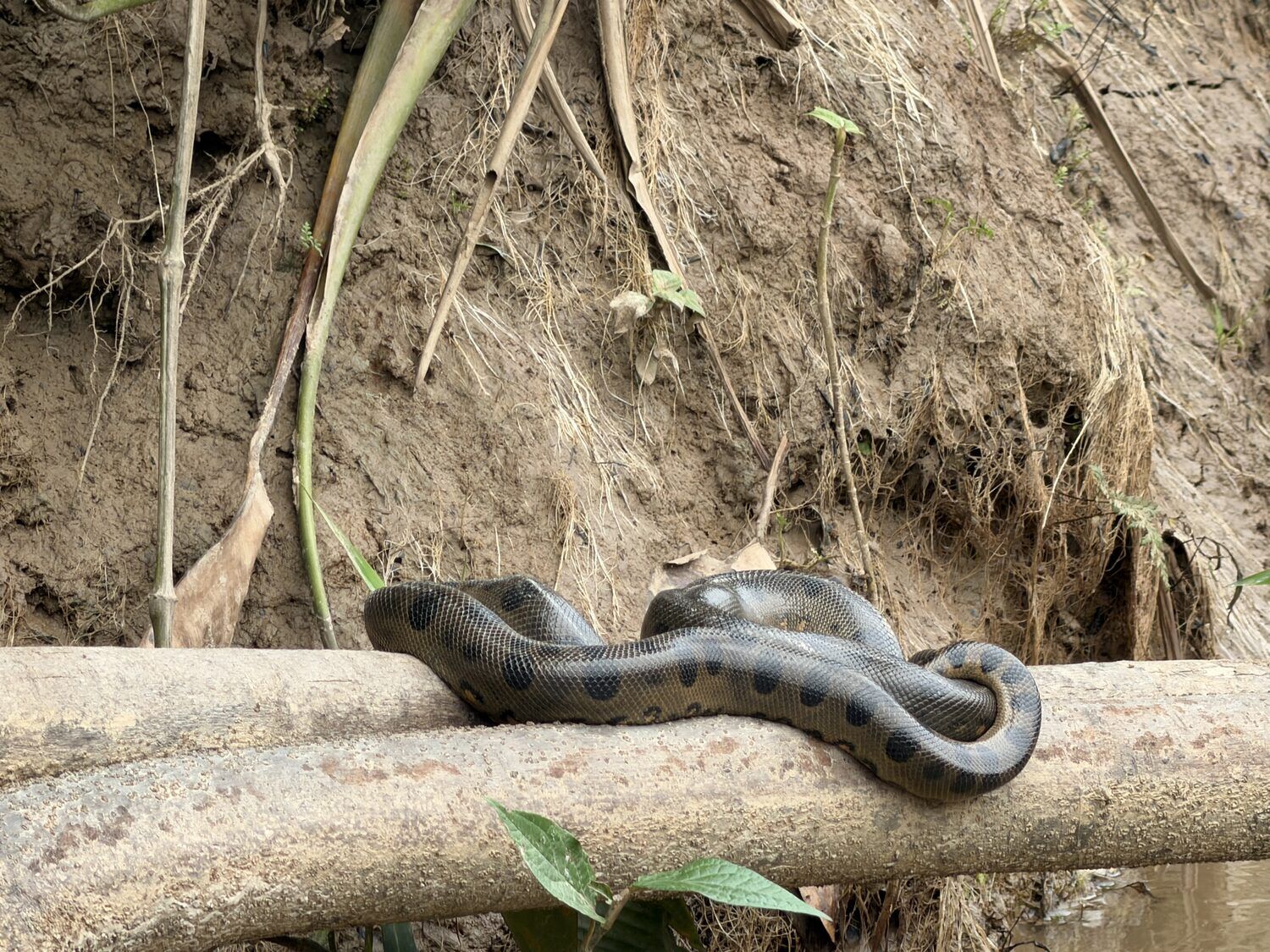
We will document birds, mammals, reptiles, fish, insects, plants, and changing habitats along the entire route, from the small upstream tributaries to the main stem of the Amazon.
We will visit Indigenous and river communities, including Kichwa and Waorani communities where appropriate, documenting how people live, travel, fish, hunt, farm, trade, educate their children, access healthcare, and interact with the outside economy.
Oil, mining, and timber are not a side story in the Ecuadorian Amazon. They are part of how the region works, who is employed, what governments earn, and what arrives downstream. We are not reducing any of them to a simple verdict.
Ecuador's Amazon is inseparable from oil. We will examine where petroleum infrastructure intersects with rivers and communities, what economic benefits it provides, and what environmental costs accompany it.
We will look at both legal and illegal mining, particularly its relationship to rivers, sediment, mercury contamination, deforestation, employment, and organized crime.
Rather than reducing mining to a simple good-versus-bad story, we want to understand why it continues and who benefits from it.
We will document areas of intact forest alongside cleared or commercially used land, and investigate the economic forces behind timber extraction, agriculture, roads, settlements, and development.
A waterway that predates every border drawn across it is difficult to govern, difficult to police, and impossible to understand without its history.
The same waterways used by Indigenous communities, fishermen, traders, tourists, researchers, and conservationists can also be used for contraband and narcotics trafficking.
Without interfering with law enforcement or putting the expedition at unnecessary risk, we will document signs of that shadow economy and discuss how geography makes these rivers so difficult to govern.
Crossing from Ecuador toward Peru gives us an opportunity to examine how national boundaries interact with waterways that existed thousands of years before either country.
We will explore the political history of the region, including the long territorial rivalry between Ecuador and Peru, how the borders were ultimately established, and what those borders mean to communities whose cultural territories extend across them.
The story of the Amazon cannot be separated from the Waorani, Kichwa, and other Indigenous peoples who have lived along these waterways for generations.
We will examine encounters with missionaries, governments, oil companies, settlers, researchers, conservation organizations, and tourism.
Every thread on this page eventually arrives at the same set of questions. They are the reason the expedition exists.
What does the modern Amazon actually look like beyond the romantic image of untouched rainforest?
Can conservation coexist with the legitimate economic aspirations of the people who live there?
Who bears the environmental cost of the resources consumed elsewhere?
What happens when national governments, Indigenous sovereignty, conservation, oil, mining, agriculture, tourism, and organized crime all compete for influence over the same landscape?
And ultimately, who owns the future of the Amazon? The governments that administer it, the companies that extract from it, the consumers who depend on its resources, or the communities who have lived there for centuries?
We should not begin the expedition pretending we already know every answer. But there are several conclusions we expect the journey may reinforce, and stating them up front is how the work stays honest.
The Amazon is neither pristine wilderness nor hopelessly destroyed.
It is a complicated working landscape where extraordinary biodiversity exists alongside industry, poverty, commerce, conservation, and development.
Environmental problems downstream frequently begin with economic decisions made far upstream, sometimes thousands of miles away.
The consumer rarely sees the forest, river, mine, oil field, farm, or community connected to the products they purchase. Sense of Source is fundamentally about reconnecting those two ends of the supply chain.
Indigenous communities cannot simply be treated as characters in a conservation story.
They are governments, landowners, entrepreneurs, families, workers, cultural custodians, and political actors making difficult decisions about their own futures.
Protecting the Amazon is unlikely to succeed through conservation alone. Any durable solution has to address economics.
People must be able to create viable livelihoods without destroying the ecosystems upon which those livelihoods ultimately depend.
Running alongside the environmental documentary is a second story our partners have a genuine stake in. Equipment will not be photographed beside the Amazon; it will be used across thousands of miles of Amazonian waterways.
Instead of staged product placement, sponsors become part of the expedition narrative. Their equipment helps us navigate rivers, communicate from remote areas, collect scientific observations, document wildlife, protect gear, travel safely, and ultimately complete the expedition.
Sponsors support the expedition; they don't control its conclusions. That editorial integrity is exactly what protects a partner's association with the work.
The result is a project that combines exploration, documentary storytelling, environmental observation, cultural history, geopolitical investigation, conservation, adventure, and real-world product testing into a single continuous journey.
And the Amazon River becomes more than the backdrop.
It becomes the connecting character in every story.
Founding-partner conversations are open now, ahead of the 2027 departure. Reach out for the full prospectus, the shot-by-shot journey, and a call.
robert@senseofsource.com Sense of Source