 Sense of Source
Before El Monte existed, Tom Quesenberry was solving a much smaller problem: an infestation of leaf-miner pests on a flower farm in the Ecuadorian highlands. I met him there in 1997. A year later, he and Mariela Tenorio opened a lodge in the Mindo cloud forest, and the same instinct that built that little pest-control device has been running the place ever since.
A Flower Farm in Guayllabamba, 1997
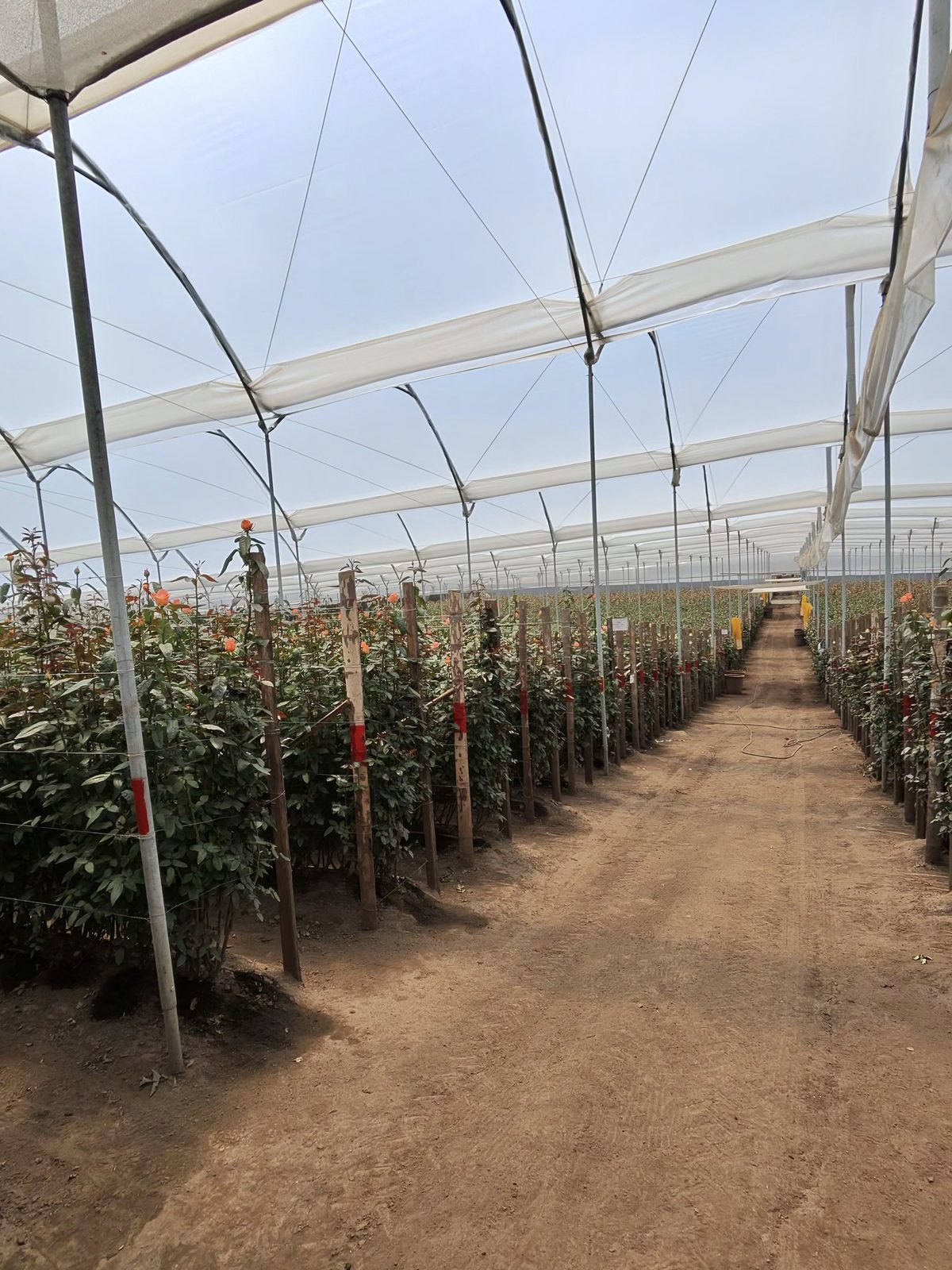
I've spent close to four decades buying flowers out of Ecuador for Florida Fresh Events, which meant a lot of time on farms in the highlands north of Quito. One of them, in Guayllabamba, was a farm we did a great deal of business with over the years. That's where I first met Tom.
At the time he wasn't running a lodge. He was working the growing side, and he'd built something the farm needed: a mechanical device that physically removed leaf-miner larvae from the plants. The obvious answer to a leaf-miner problem is a broad-spectrum pesticide, and it works, but it also kills the wasps and other insects that prey on leaf miners naturally, which means you need more pesticide next season, and more the season after that. Tom's device pulled the pests off the plant without touching the predator population, which meant the field kept its own biological check on the problem instead of depending entirely on a spray schedule.
It's a small story. But it's the same idea that runs everything Tom has built since: figure out how to work with a system's own balance instead of overriding it.
The Same Instinct, Different Forest
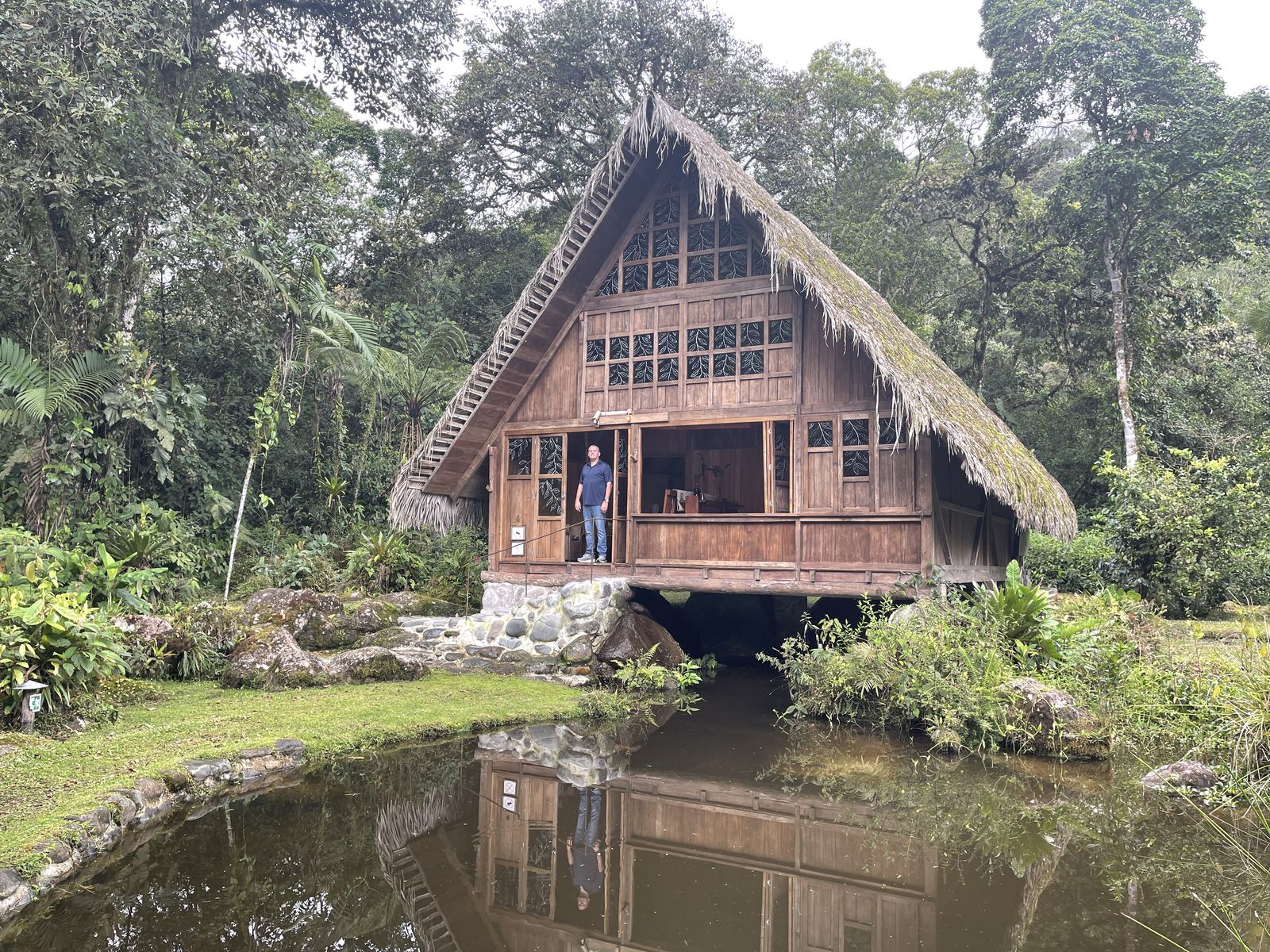
In July 1998, Tom and Mariela Tenorio opened El Monte Sustainable Lodge on the Mindo River, in the cloud forest west of Quito. Different problem this time (not a pest on a crop, but a forest under pressure from logging and development), but the same underlying bet: that a system's balance is worth protecting on purpose, and that it can be done in a way that pays for itself rather than asking anyone to simply do without.
Their model was ecotourism as conservation strategy, built on the belief that economic incentive and local education are what actually keep a forest standing: not a fence and not a law nobody has a reason to follow. Guests come for birdwatching, hiking, tubing on the river, and rustic cabins along the water; the income keeps the forest worth more standing than cut. El Monte also backs the Mindo Biological Station, founded in 2001, which has hosted university research groups studying the cloud forest ever since.
Mindo sits inside the Chocó-Andes region, one of the most biodiverse strips of land on the planet, and the area is one of the most-cited birdwatching destinations anywhere: hummingbirds alone account for dozens of the species that pass through. None of that is guaranteed to survive contact with a growing country. It survives because specific people decided to make it pay to protect it.
A flower farm, a cloud forest, and an Amazon lodge: conservation has to pay for itself, or it doesn't last.
A Wider Network Than Mindo
Tom and Mariela didn't stop at El Monte. Over the years they've helped establish other community-owned lodges around Ecuador, including Sani Lodge (which protects roughly 37,000 hectares of Amazon rainforest), Eden Amazon Lodge, and Otobo's Amazon Safaris.
That last one is not a coincidence for this project. Otobo Baihua is the Waorani naturalist and lead guide on the Amazon Source Expedition, running his own territory near Bameno on the Cononaco. Tom and Mariela helped him build the very operation Sense of Source now travels through. The connection between Mindo and the Amazon in this story isn't just thematic; it runs through the same two people, in a different forest, more than a decade earlier.
Why This Story Belongs Here
Sense of Source exists to introduce people to the sources behind the things that sustain them, and to the people standing behind those sources. Tom is one of those people, and so is Mariela, an Ecuadorian conservationist and educator whose own roots in Mindo made El Monte's community relationships possible in the first place.
I didn't meet Tom because I was looking for a conservation story. I met him because he'd solved a problem on a flower farm, the way growers do. Everything since (El Monte, the biological station, Sani Lodge, Otobo's operation on the Cononaco) has been the same problem asked at a larger and larger scale: how do you keep a system's balance intact while people are still allowed to make a living from it?
That question is the whole reason this foundation exists.
Robert McLaughlin
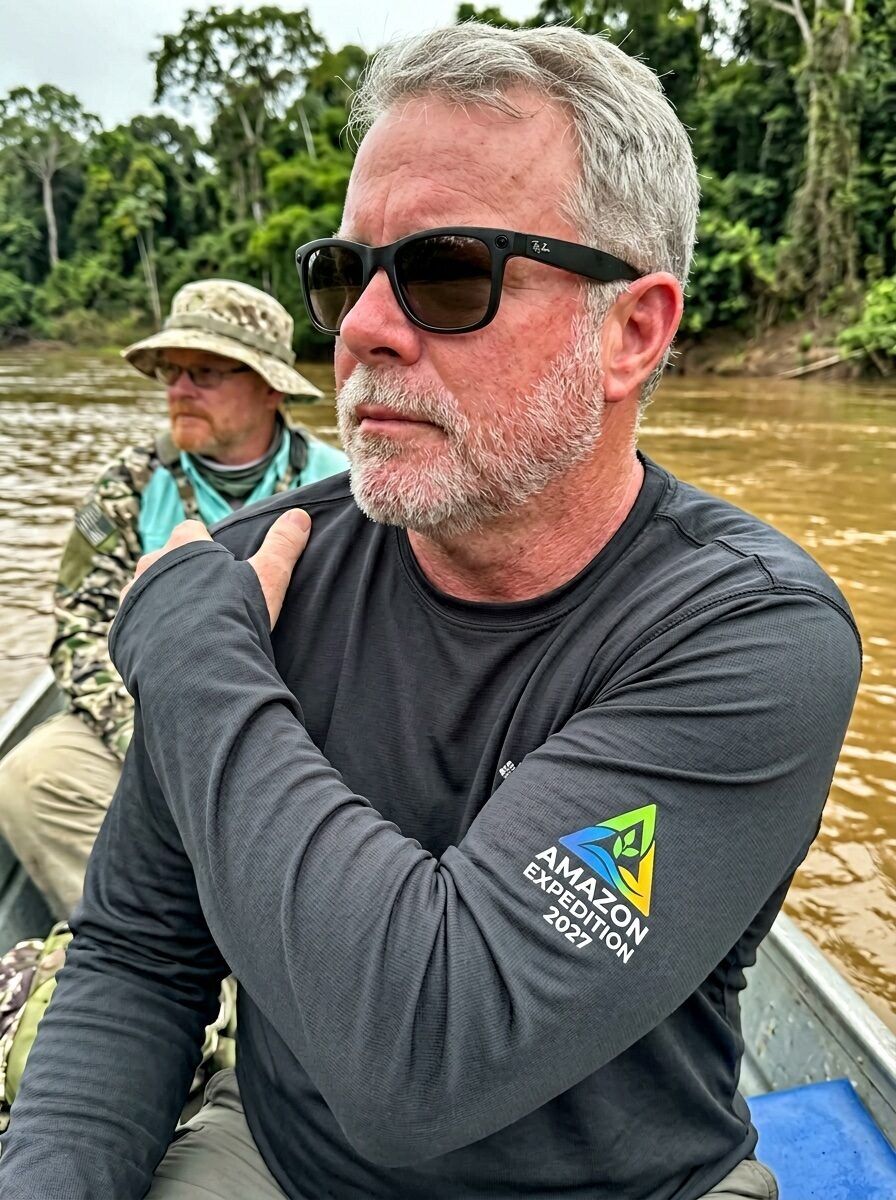
Founder of the Sense of Source Foundation and president of Florida Fresh Events. Nearly four decades with growers and communities at the source of flowers, coffee, and food across the Americas, now leading the Amazon Source Expedition 2027 and the Foundation's growing network of Ecuadorian conservation partners.